

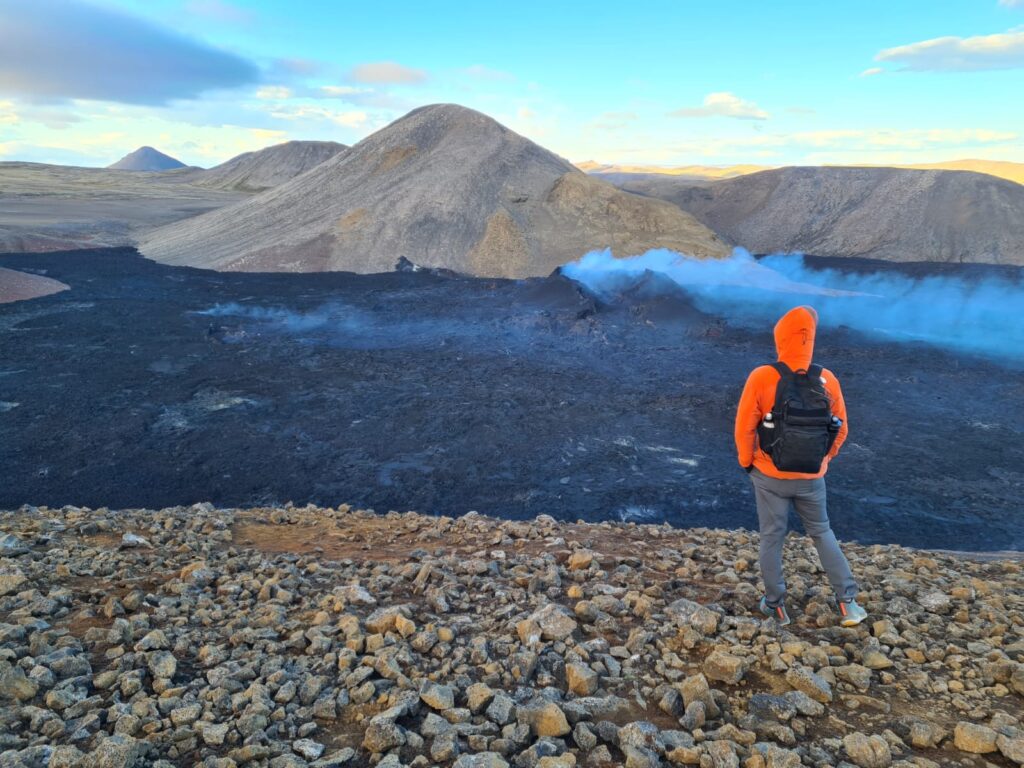
Volcano activity in Iceland is not an unusual event – it is part of how this country exists.
Because Iceland lies on an active volcanic zone, eruptions happen regularly, especially on the Reykjanes Peninsula. This naturally raises questions for travelers: Is it safe to visit? Will roads be open? Can you still travel normally?
This guide explains what volcano activity in Iceland actually means for visitors – honestly, calmly, and based on real conditions on the ground.
Volcano Activity in Iceland – Context Matters
Volcanic eruptions in Iceland vary greatly in scale and impact.
Many eruptions occur in largely uninhabited areas, especially on the Reykjanes Peninsula, which has seen recurring activity since 2021. These eruptions are closely monitored and managed, with clear safety zones and access rules. At the same time, it is important to be honest: the town of Grindavík was fully evacuated, and normal residential life there has largely stopped due to ongoing geological risk.
This does not mean the entire region is unsafe or inaccessible. It means certain areas are restricted, monitored, or permanently closed, while others remain fully operational.
A Brief History Travelers Often Ask About
Many people remember the 2010 Eyjafjallajökull eruption because it disrupted air traffic across Europe. That event was exceptional mainly due to ash in the atmosphere, not because Iceland itself became dangerous for travelers.
Since 2021, multiple eruptions on Reykjanes have been very different:
- smaller in scale
- highly localized
- closely monitored
- often occurring away from populated areas
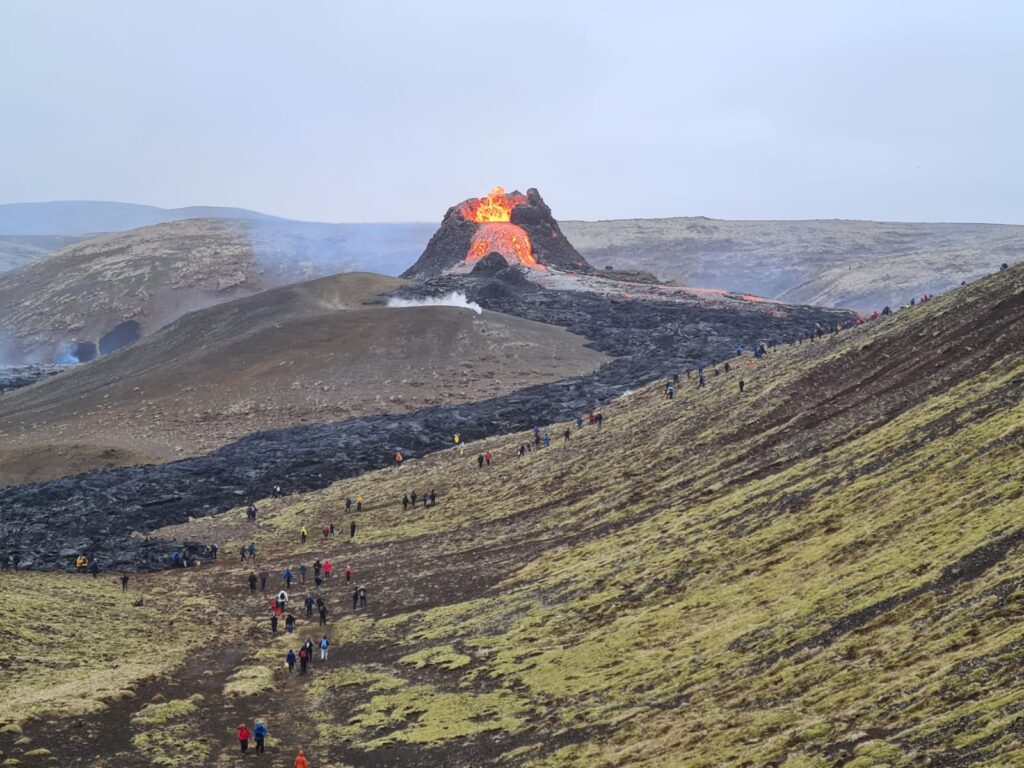
Several of these eruptions became remarkably accessible, with designated hiking routes and viewpoints. Many visitors – and locals – were able to safely observe flowing lava from a distance. Some of these areas are still visible today as fresh lava fields.
What Volcano Activity Means for Travelers Today
In practical terms, volcano activity in Iceland usually means adjustments, not disruption.
Keflavík International Airport remains open in most scenarios. Roads are closed only where necessary, often temporarily, and are clearly marked.
A very real example:
the road leading to the Blue Lagoon was covered by lava during recent eruptions. That section was later rebuilt directly on top of cooled lava, and today hundreds of vehicles use it daily, including buses, transfers, and private cars.
This illustrates how Iceland adapts infrastructure quickly and pragmatically.
Before traveling each day, visitors should always check:
- road conditions on road.is
- official safety updates on safetravel.is
These sources reflect real-time conditions and should always override assumptions or old information.
Safety Rules and Closures – Take Them Seriously Here
This is important.
In many countries, warning signs are often ignored without consequences. In Iceland, that approach can be dangerous. Closures, barriers, and access restrictions exist because:
- ground conditions can change rapidly
- gas emissions can be hazardous
- lava fields may look solid but remain unstable
If an area is closed, it is not a suggestion – it is a decision based on expert assessment.
Volcano activity in Iceland is managed carefully, but it relies on visitors respecting rules and staying within permitted areas.
Can You See Lava? Yes – In the Right Conditions
One of the most common questions we hear is whether visitors can actually see lava.
The honest answer is: sometimes, yes – and often safely.
In recent years, travelers have been able to see:
- fresh lava fields only a few months old
- designated viewpoints near Grindavík
- areas close to the Blue Lagoon region where lava is clearly visible
These locations are legal, accessible, and clearly marked, including on Google Maps. Seeing cooled lava up close is already part of many Reykjanes visits.
During active eruptions, visibility depends entirely on current conditions. Sometimes lava can be seen from a distance, such as a red glow on the horizon. Sometimes access is restricted entirely. This can change daily or even hourly.
For travelers interested in volcanic landscapes, we can organize visits to approved and safe locations, always based on official guidance and current conditions.
Seeing an Active Eruption from the Air
When volcanic activity is ongoing, many visitors are simply curious to see what is happening – sometimes just from a distance, sometimes from a different perspective.
One option, when conditions allow, is to view the eruption area from the air. Helicopter tours operate only during suitable weather and follow fixed routes approved by local authorities. For a lot of people, this feels like a calm and comfortable way to understand the scale of the landscape without getting close to restricted zones.
It is not always available and depends entirely on current conditions, but during active periods this is a well-known and regulated experience. If you are interested, you can check current helicopter tours during eruption periods and see what is possible at the time of your visit.
And if you are unsure whether this fits into your plans, or just want to understand your options, you can always reach out to us directly.
Volcano Tourism in Iceland – How It Actually Works
Iceland does not treat volcanic eruptions as spectacles without control.
When conditions allow, authorities create:
- parking areas
- walking paths
- viewing zones
When conditions change, areas are closed immediately. This flexibility allows people to experience volcanic activity without unnecessary risk.
Because of this approach, volcano activity in Iceland rarely means chaos. Instead, it becomes a managed, dynamic part of travel planning.
Should Volcano Activity Affect Your Travel Plans?
In most cases, no.
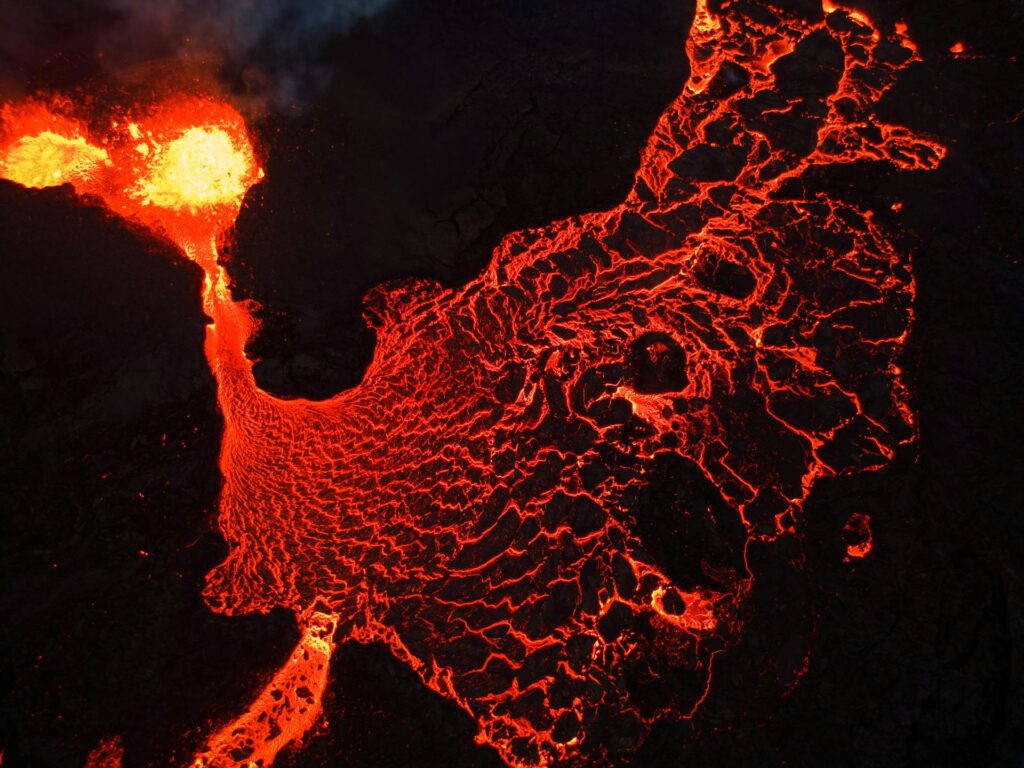
Volcano activity in Iceland does not mean you should cancel a trip. It means you should stay informed and flexible. If one area becomes inaccessible, there are always alternatives nearby. Iceland’s landscapes are not limited to a single location.
For travelers who prefer not to deal with constant checks and adjustments, tailor-made planning helps adapt routes and timing to real conditions rather than fixed itineraries.
How We Help Our Guests Navigate This
At CarBuddy, we plan trips based on current events, not what was true weeks ago.
We monitor conditions, adjust routes when needed, and suggest safe alternatives when access changes. For guests interested in seeing recent lava or volcanic landscapes, we advise what is realistically possible and organize visits to permitted locations when conditions allow.
If you are planning a trip and have questions about volcano activity in Iceland, explore our Tailor-Made Iceland Tours or contact us for up-to-date local guidance.
Conclusion
Volcano activity in Iceland is part of the country’s reality, not a reason for panic.
With honest information, clear rules, and respect for safety measures, it becomes something to understand rather than fear. Many travelers find that witnessing the traces of recent eruptions – cooled lava fields, reshaped landscapes – adds a unique dimension to their visit.